
There’s a tincture of strongly diluted yearning, and uncertainty bordering on fear, that we sometimes soak ourselves in. It’s called hope. It’s a hope for nothing specific—a hope for change, a hope for favorable outcomes even if they’re ill-defined. It’s more like a mood, or like an annoying, minor cold.
The Stanford Encyclopedia of Philosophy has an entire article on hope, so clearly it’s occupied other people’s minds. I’ll share just a couple of thoughts out of many in my fight to eradicate hope from my mental space.
It’s curious to me that English and Polish reveal different attitudes toward hope. In both languages, one may “have” hope, but only in English can one hope—as an action. In Polish, hope is only a noun. You can “feed” hope (żywić nadzieję), which is similar in meaning to “having” hope. The fact that, in an archaic phrase, a pregnant woman can be “next to hope” (przy nadziei) suggests that hope is like a child that one feeds. But to me, it feels more like a parasite, and the feeder its host.
Out of the three theological virtues, I only have faith in charity—and I hope others do as well.
(And I hope you see what I did there.)
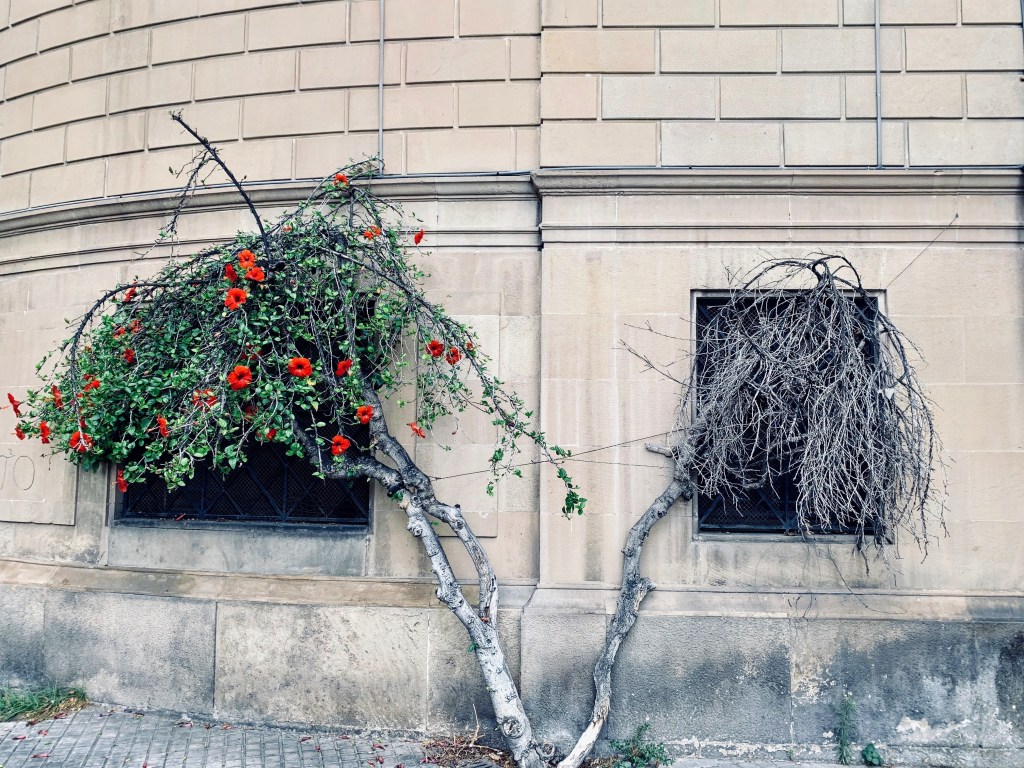
 Third Woods