
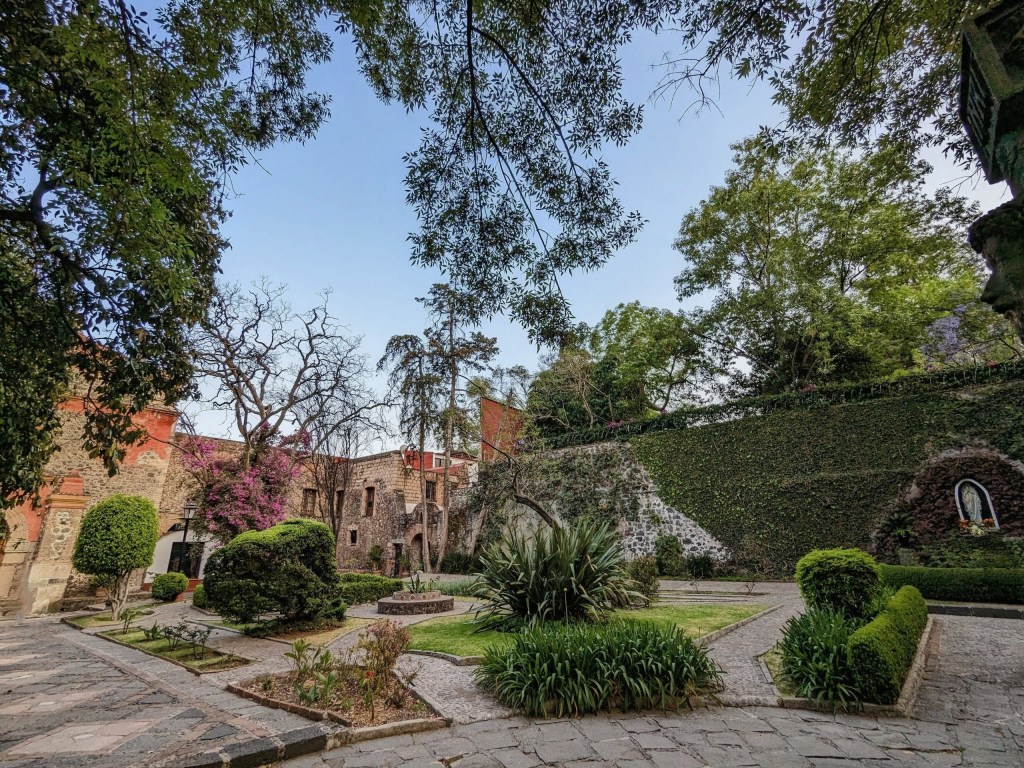
The liminal spaces of San Ángel
Mexico City is the place to get lost — to be in that scarexciting state where you’re not sure if you’ll get stabbed or surprised with flowers. Or, ideally, stabbed with flowers. Its neighborhoods, known as colonias, are like pocket universes, each self-contained in its histories, their cultural clashes and quiet marriages. To cross from one to another is to travel.
The wild pulse of colonia Coyoacán still beats in my chest as it spits me into San Ángel — quieter, monastic, liminal. I wander its narrow streets in search of people, hoping to find them at Plaza San Jacinto, marked on my map. Not that I miss people. But for one of the most populous cities on Earth, Mexico City feels eerie with no one in sight.
At the Plaza, life returns. I buy an apple from a small stand. The wrinkled hand that sells it, presses against the smooth skin of the fruit. A contrast — like San Ángel and Coyoacán. I sit on a bench. I watch and I listen. Two old men argue about local politics. Both seem discontent about everything — so what, exactly, is the bone of contention? Their hats carry ornaments whose meanings I can’t decode. A security guard, neck adorned with an intricate tattoo, is on her break, waving at her baby through a video call. Life is restored to the city. The wrinkles, the ornaments, the tattoo — they mirror the architectural details of the streets I just wandered. This parallel plants a seed of satori.
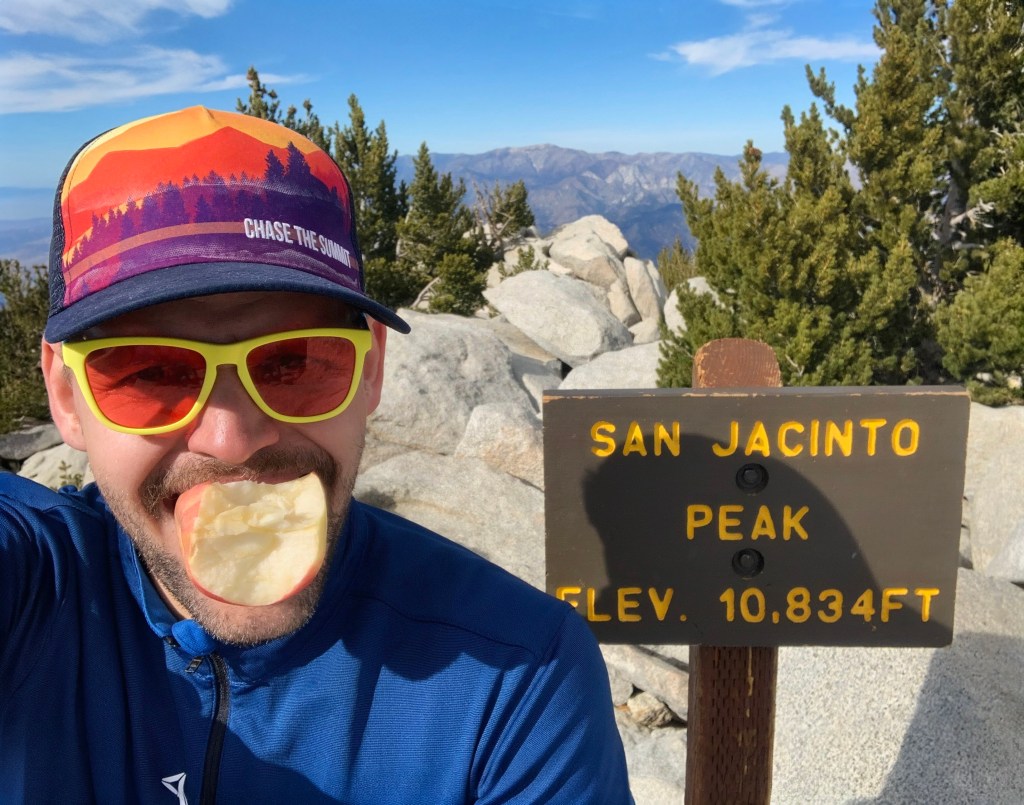
I bite into the apple. And suddenly it dawns on me: I had an apple on San Jacinto before. Not this plaza, but the mountain peak in Southern California. Another universe and another self. The memory arrives like a video call across time. The name and the fruit are enough to generate a strange resonance of moments that makes the satori sprout.
Into an apple tree.
 Third Woods