To capture with half-sentences is to allow yourself to half-forget. It is to exile the half-captured to the futureland and hope that one day we’ll stumble upon it. A year ago I spent a few days in Barcelona, and today I found a piece of paper with five half-sentences exiled to-until today. It’s time to complete the halves and exile them beyond time.
Parque de la Ciudadela
I wander through the dense foliage of the Umbráculo del Parque de la Ciudadela and suddenly pause. The path cuts between a painter and the flowers she’s painting. I hesitate, not wanting to step into her view, as if she were taking a photo. I’m frozen by this bizarre automatism—my brain misclassifying the circumstances, fooled by analogy. She looks at me, puzzled, and I move on, thinking how strange it is: the lenses of her eyes, like camera lenses; her hand, turning photons and neural activity into patterns of pigment on canvas. How strange, I think, and jot down:
“To stop to allow the painter to finish their painting, as if they were taking a photo…”
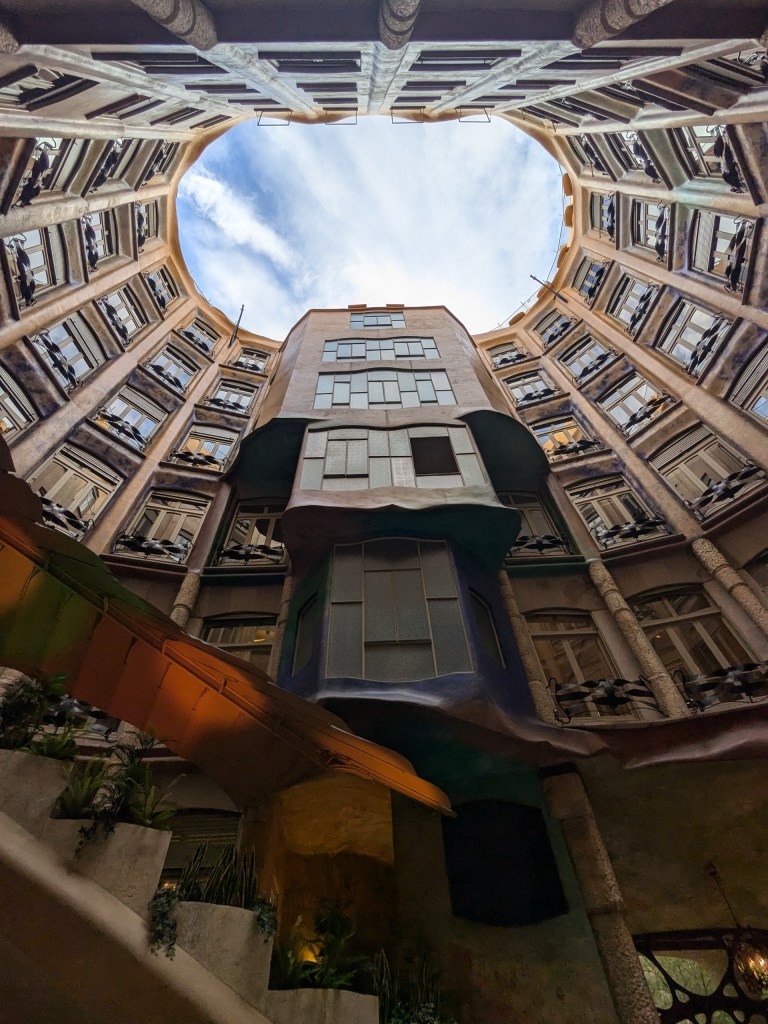
Casa Milà
I enter the kitchen, and the voice in my headphones explains the culinary habits of dwellers from more than a century ago. Then, in the bedroom, I learn that the bed—like much of the furniture in Casa Milà—was designed by Gaudí, in line with the modernist idea that the architect should control every detail, down to the decor. Crowds shuffle around, hearing the same lines in dozens of languages, and again the oddness of the situation strikes me. Someone lived here. This was once the stage for the mundane and for the private dramas. Most likely no one imagined it would become a museum. That crowds would stomp the ground where children once played, and the drunk once vomited. That the couch where someone died, and someone else made love, would become a centerpiece—ignored by some and photographed for Instagram by others, their faces becoming the new centerpiece. And what if it happens to me? What if, by some unforeseen turn, my house, my room, were deemed worth exhibiting—but the walls and furniture could never tell the stories of the mundane and the dramas? Another thought strikes me, and I jot down:
“My home won’t be a museum, cause I won’t have a home”
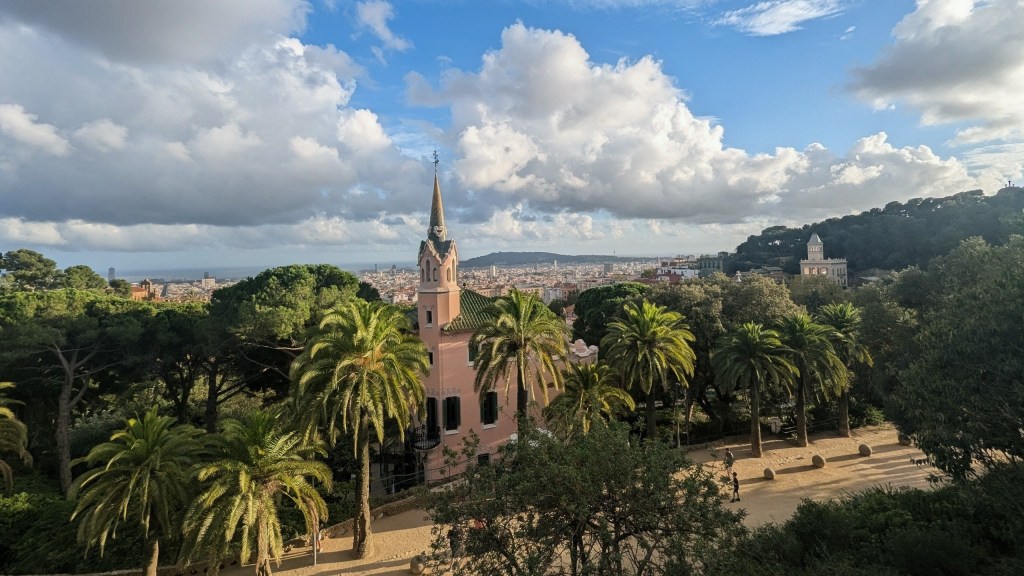
Park Güell
Like much of Barcelona, the park is ravaged by tourism (with me being part of the problem). It’s a miracle I find a secluded spot. Maybe the crowds dislike the musician filling the enclosed space with his mellow voice and guitar. He’s singing Natalia Lafourcade’s Soledad y el mar, and perhaps crowds don’t like solitude. I give him a few euro bills and head toward the exit. From the hill, I see a group of local kids practicing drums. Undisturbed by the passing tourists, they’re in a trance, and one boy catches my attention. He has just one stick and one drum, but the passion and focus with which he strikes it are indescribable. It’s this juvenile channeling of energy we lose as we age. The joy of the simple. The joy of the new. I can’t stop watching him, and when I finally do, I jot down:
“Be like the boy drumming in Park Güell”
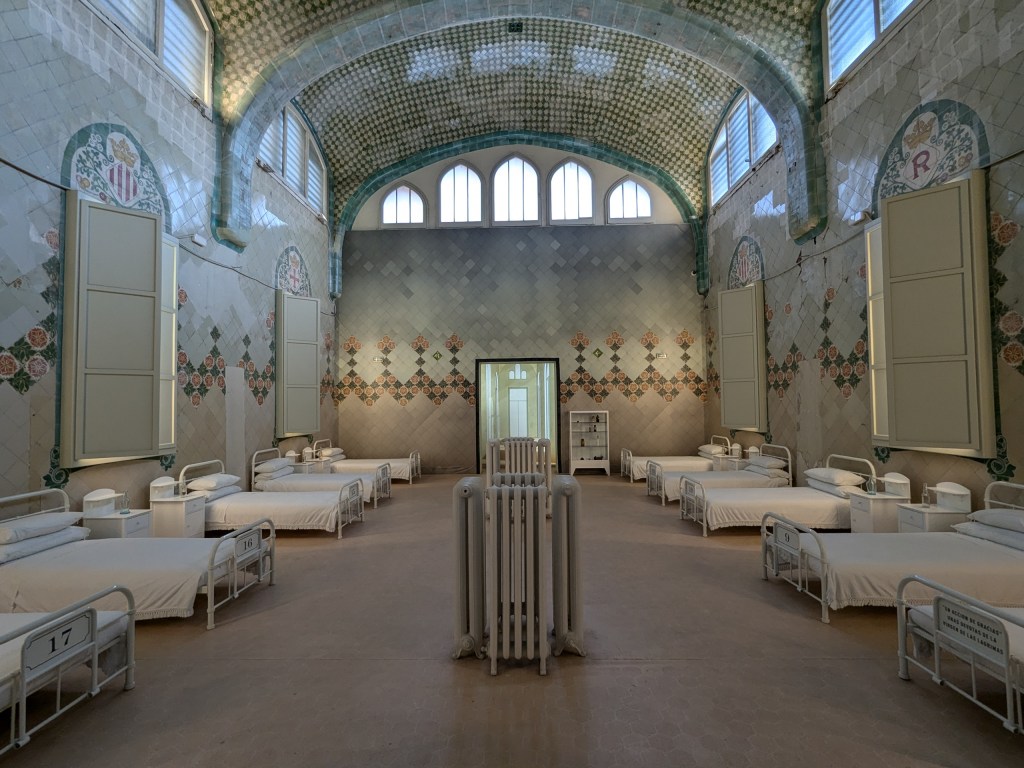
Sant Pau Recinte Modernista
It’s a strange place. So peaceful, so beautiful, yet perfect for a horror film. An old Modernist hospital: a place where suffering clashed with architectural design. If one must suffer, why not suffer in beautiful surroundings, I think—but I can’t convince myself. With this unresolved dissonance, I emerge from the underground tunnels connecting the wards and get caught in a peculiar crowd scattered across the courtyard. Slowly, I realize it’s a fashion show. Skinny boys and girls with pale faces and tense lips contort their bodies so that each frame captures a new angle, a new pose. A comical sequence if taken out of context. Then again, perhaps there is no context—it’s just comical. No context can save it. Maybe it makes things even worse. Tragicomical! I usually try to defend or at least justify things I don’t agree with, but this time I jot down:
“Fashion Week is shit”
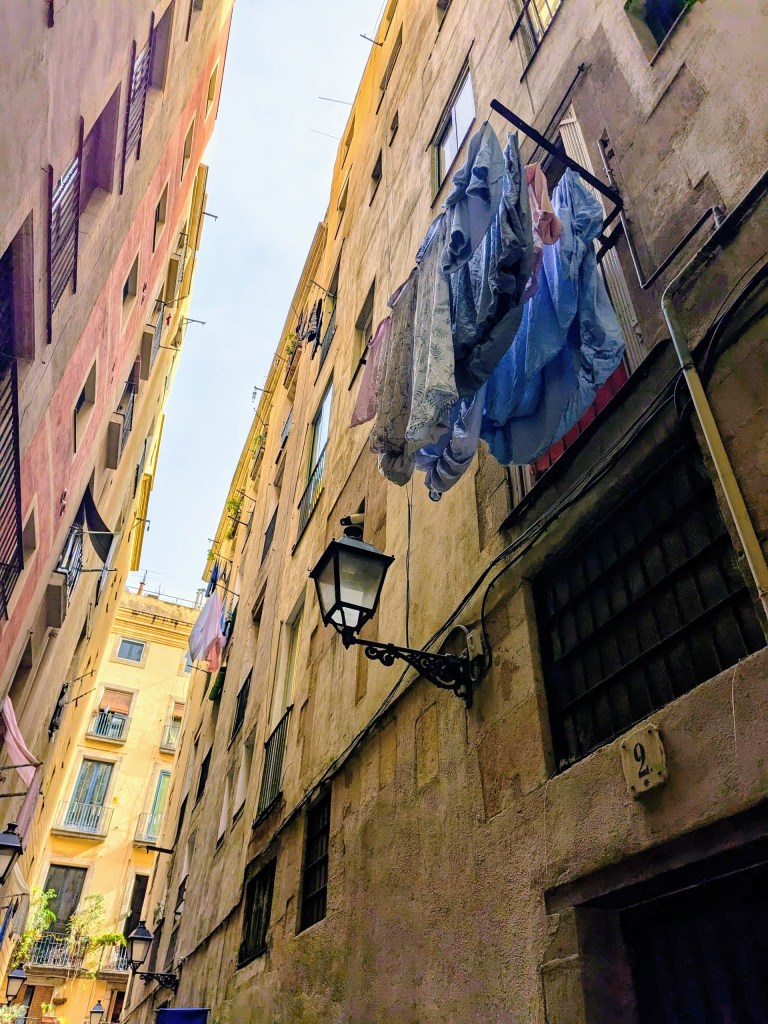
Gothic Quarter
There is a small puppy and a little girl from a rural market in Peru playing in my head. They symbolize what I call the endangered immutable. The things that have been a part of human society for ages. I bet you could see a child playing with their puppy on the market in Babylon and you can see it now in rural Peru. Yet, even though it would be strange, by Copernican Principle, that I am in the “privileged” moment in time to witness something going extinct, there is the feeling that some things are terminal. That markets will eventually vanish into online shopping, and puppies will be replaced by sophisticated tamagotchi with dog language models. Here in the Gothic Quarter, I stare at drying laundry. At first, I think there’s something pleasing in the geometry and palette of the clothes. But then the puppy in my head barks, the girl laughs, and I look around at walls that have watched clothes dry for centuries. I jot down:

 Third Woods